
New book rethinks science education for young learners
Children need to experience the wind, water, plants, and animals on their own before everything is explained to them.
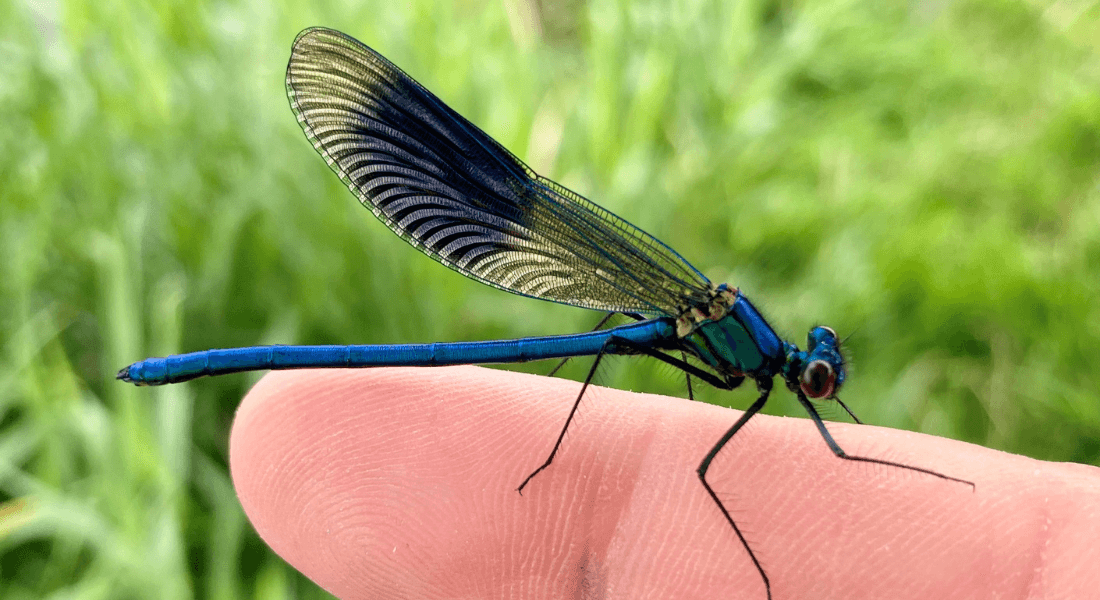
Many children enter school with a strong curiosity about nature and natural phenomena, but their interest in science declines significantly as they move through the grade levels. Research and reports show that the current structure of science education excludes far too many students, and overall interest in the sciences has been dropping – even though billions of kroner have been invested over the past decades to strengthen science teaching in Denmark.
In a new collaboration between Naturcenter Amager Strand and Center for Macroecology, Evolution, and Climate (CMEC) at the Globe Institute, University of Copenhagen, a group of science education specialists aims to reverse this trend. Their new book places students’ direct experiences with nature at the forefront.
Experience precedes explanation
In Manifest for et andet naturfag (Manifesto for a New Science Education), the authors rethink the elementary school subject science/technology in grades 1–6. The book calls for an approach that prioritizes children’s own encounters with the natural world. The goal is a curious, hands-on, analog form of science education that takes place outside the traditional classroom.
-Something remarkable happens when students are allowed to investigate their natural surroundings without knowing the answers beforehand. You can’t force that type of curiosity – it emerges from real encounters with the living world, says Katrine Minddal, Educational Developer at CMEC, science teacher, and co-author of the book.
For her, the manifesto is fundamentally about creating space for an investigative mindset rooted in close contact with nature:
-Once students have seen and felt for themselves how nature behaves, changes, surprises – science becomes not just a subject, but a way of engaging with the world.
She hopes the book will inspire teachers, schools, and especially policymakers to prioritize children’s firsthand experiences in and with nature.
Science is built on observation
For Carsten Rahbek, Professor and Director of CMEC, the message of the manifesto is not only pedagogical; it is deeply scientific:
-If we want the next generations to truly understand science – biodiversity, evolution, and the complex systems shaping our planet – we need to give them access to nature experiences, along with the freedom to explore and be curious. These are qualities that children naturally express through play.
Rahbek emphasizes that even the most advanced scientific models and theories are grounded in the work of people who spent time in nature, observing species and making sense of what they saw.
-Scientific inquiry begins with observation and wonder – not with facts. That’s where curiosity is sparked and where intuition for natural processes develops. Without those experiences, we risk educating students who can repeat scientific concepts but have no real sense of what they mean in reality.
We need to prioritize
Karsten Elmose Vad, Program Head of school program at CMEC, is one of the authors. He sees an urgent need to not just tweak the current subject science/technology, but to make deliberate choices:
-We’re not inventing a whole new subject or adding another task to the school system. On the contrary, this is about reducing. Science/technology is currently overloaded and under-resourced. So, it’s crucial that we prioritize what matters most for students’ scientific literacy and understanding of nature: their encounters with the world around them – not through digital screens and devices, but through their own senses and experiences.
About the Book
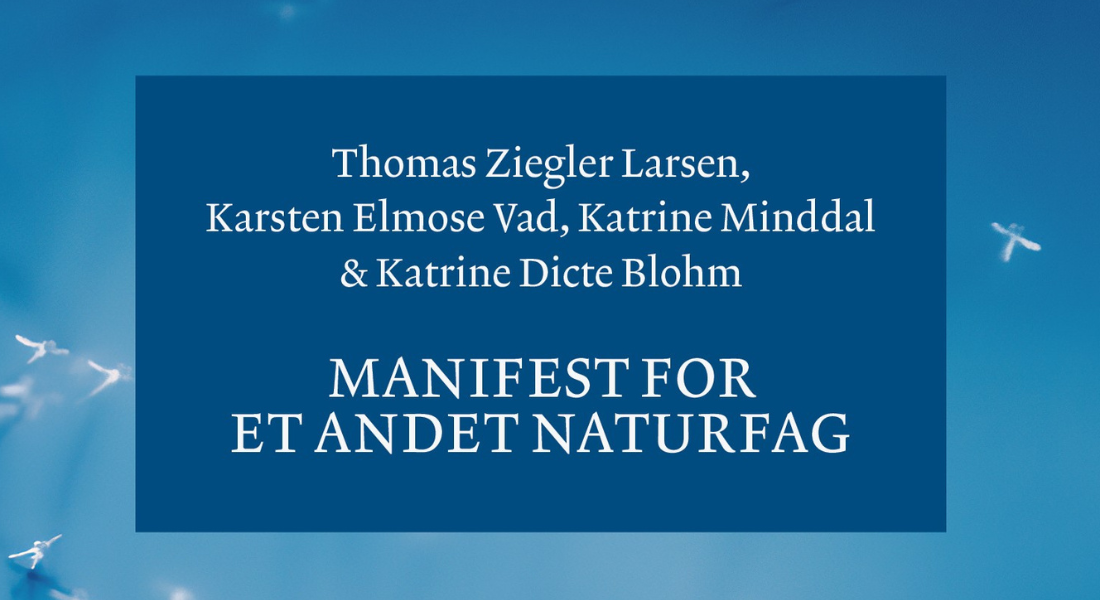
Manifest for et andet naturfag (Manifesto for a New Science Education) is written by Thomas Ziegler Larsen, Karsten Elmose Vad, Katrine Minddal, and Katrine Dicte Blohm.
The book is published by A Mock Book as part of the GAIA series, which explores humanity’s relationship with nature in the context of planetary crises.
The foreword is written by science teacher Mette Hejn, and the book features striking photography by award‑winning nature photographer Mikkel Due Andersen.
The book is released on March 2, 2026, and will be available through most Danish online booksellers.
Contact
Karsten Elmose Vad
Senior Consultant
Email: kevad@sund.ku.dk